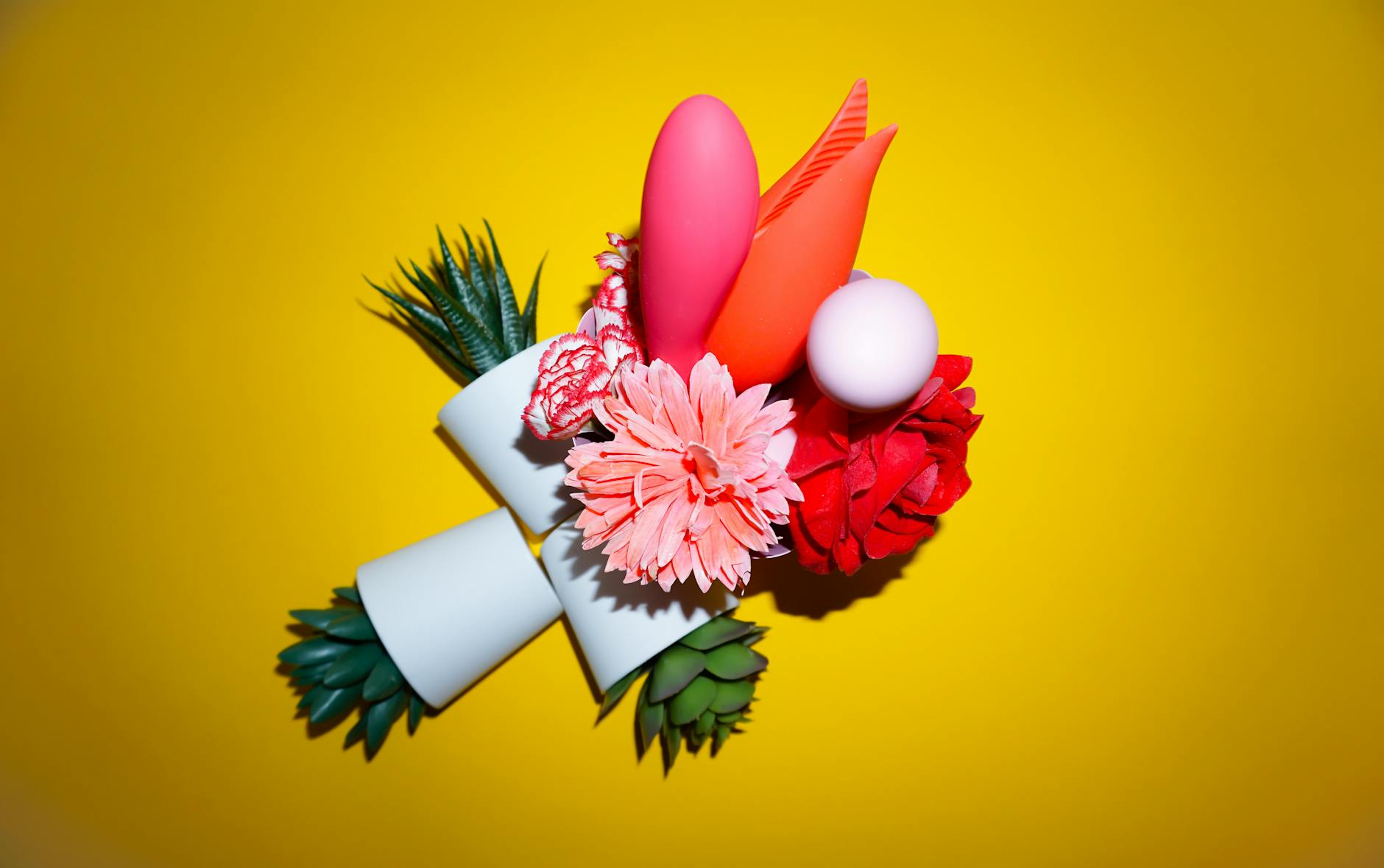
The mismatch nobody talks about
Here's the thing about partnered pleasure: what feels incredible to one person can feel flat, too intense, or completely off the mark to someone else. You discover that your partner loves direct, firm pressure while you're drawn to the gentler pulse of air-suction technology. Or they want everything to happen fast, and you need 20 minutes of building sensation. Or they think toys fundamentally change the dynamic of sex, while you can't imagine going back to hands alone.
Most couples stare at this divergence and feel like they're stuck. Either someone compromises and resents it later, or the conversation becomes an argument about who's being unreasonable. What rarely happens is straightforward communication about what lemon clitoral vibrators actually make possible: a way for both of you to get exactly what your bodies need, at the same time, without one person's pleasure diminishing the other's.
The Lemon Clit Massager changes this equation because its suction technology works for people who prefer gentler, more diffuse stimulation. But that doesn't mean your partner has to love it the same way you do. Here's how to navigate that.
Why you actually want different things (and that's fine)
Stimulation preferences aren't really about the toy. They're about how your nervous system is wired, what you learned about pleasure growing up, how sensitive your tissues are, and what your body needs to feel safe enough to let go. Your partner isn't being difficult or refusing to adapt. They're describing their actual physiology.
Some bodies respond to broad, gentle suction. Others need more pointed, sustained pressure to register sensation at all. Some people climax faster with novelty and external stimulation. Others need the psychological component of their partner's touch, which a toy can interrupt instead of enhance. None of these are better or worse. They're just different nervous systems.
Here's what I see in my practice: couples often interpret stimulation differences as preference differences ("they don't want to use a toy") when they're actually sensation differences ("they can't feel much with that kind of touch"). Once you stop making it personal, you can problem-solve.
The architecture of a shared session
Instead of trying to find a toy or approach that magically works for both of you equally, think in layers. You can use a Lemon vibrator for yourself while your partner engages with you in other ways. It sounds obvious, but most people jump straight to "we both have to like the same thing" and quit.
One model that works: you use your lemon clitoral vibrator while your partner provides the touch or sensation they actually prefer giving. Maybe that's hand stimulation, maybe it's penetration, maybe it's their mouth. The point is, you're not both reliant on the same tool. You're each using what works, simultaneously.
Another model: alternate. You spend 5-10 minutes with your preferred stimulation while they watch, participate, or use the time to transition into what you're about to do together. Then you switch. It sounds mechanical, but honestly, it's cleaner than pretending you both love the same thing.
The third model, which works for some couples: your partner learns how to use a lemon vibrator on you, which means they're not using it for themselves but are engaged in creating the sensation. This solves the "toys feel isolating" problem for some people because they're still the one driving the experience, just with a better tool.
When your partner thinks toys are a threat
Let's name the elephant: some partners carry anxiety about sex toys. They worry toys will replace them, or that your preference for a lemon sucker means you find their touch inadequate, or that introducing a device signals something wrong with the relationship. These worries almost never get voiced directly. Instead, they come out as "I don't think we need that" or "It feels weird to me."
If your partner is in this camp, here's what actually helps: data and reassurance, not persuasion. Research from Indiana University shows that couples who use toys together report higher relationship satisfaction and more frequent sex. That's not opinion. It's measurable. Lemon clitoral vibrators, specifically, are designed around the fact that many bodies need different types of stimulation than hands alone can provide. Using one isn't a referendum on your partner's competence. It's a statement about your body's needs.
You might also say something like: "I love touch from you. I also know my body responds differently to suction. Can we figure out how to have both?" Notice that you're not asking permission. You're inviting collaboration.
The conversation script that actually works
Instead of "What do you think about using a toy?" try: "I've noticed I need a longer build-up time than you usually give me. I'm interested in using a lemon vibrator because it helps me get there. What would feel good for you while I'm doing that?"
Notice what that does. It states a fact about your body, not a criticism of theirs. It names a specific solution. And it immediately asks what they want, which signals this isn't about them accommodating you. It's about both of you getting something.
If they push back, don't defend the vibrator. Get curious. "What comes up when you think about that?" or "What would make this feel better to you?" Often, the barrier isn't really about the tool. It's about feeling left out, or worrying the dynamic will change, or just unfamiliarity.
Once you know what's actually driving their hesitation, you can address it. If they feel left out, maybe they're the one holding the lemon vibrator, which makes them an active participant. If they're worried about the dynamic changing, you can reassure them this isn't about replacing partnered sex. It's an addition, not a substitution.
The pleasure architecture that works for different bodies
Lemon vibrators work because they deliver consistent, diffuse stimulation that many bodies find easier to build sensation from. But they're not faster or more intense than everything else. If your partner is someone who prefers deep, sustained pressure, a lemon sucker alone won't satisfy them. But that's okay. You're not trying to make them want what you want. You're trying to make space for what you both want.
Here's a real scenario: you prefer gentle suction that builds slowly. Your partner prefers firm pressure that gets them there quickly. One approach is to use your lemon vibrator on yourself while they use their hands or another toy for the sensation they actually need. You're having sex at the same time, responding to each other, but you're each getting what your bodies require.
Another approach: your partner uses their preferred stimulation first, until they've climaxed or are satisfied. Then you use your lemon clitoral vibrator while they're present, engaged, maybe touching you elsewhere. The pressure to perform simultaneously lifts. Everyone gets what they need.
When you want partnered contact and the vibration
This is where things get creative, and honestly, where a lot of couples report their best sex. Your partner can be inside you, or touching you, or penetrating you while you use a lemon vibrator on yourself. You get the sensation of the toy. They get the sensation of being close to you. Both of you are stimulated. Neither of you is watching from the sidelines.
Some partners find this threatening at first ("I want to be enough"), and some find it incredibly hot ("I love watching you feel good"). Usually, it's both things at different times. The key is that you're deciding what works for your body, and they're deciding what works for theirs, and you're finding the overlap.
With a lemon clitoral vibrator, this is usually easier than with larger or more aggressive toys because the suction technology is gentler and doesn't interfere as much with penetration or other kinds of contact. It's one of the reasons so many couples report that air-pulse toys feel different in partnered settings. They're less demanding. There's more room for everyone.
Building the conversation over time
One conversation won't resolve this. If your partner has never used a toy, or has anxiety about them, or genuinely prefers stimulation you can't provide with your hands, you're in a longer negotiation. That's not a bad thing. It's actually where real intimacy lives. Most couples don't talk about pleasure differences this directly until something forces the issue.
Start small. Share an article about how different bodies have different sensation needs. Not to convince them. Just to normalize it. Talk about what you feel, without asking them to match it. Let them bring questions to you instead of you selling them. Over weeks or months, this usually softens. Not because they've been persuaded, but because they understand what you actually need, and they start thinking about how to help.
If your partner remains completely resistant, that's information too. It might mean you need to accept that partnered sessions work differently than solo sessions. It might mean you have solo time where you use what you want, and partnered time has different rules. It might mean this is one of several places where you're not perfectly aligned, and that's something to work through together.
The fact nobody tells you
Most couples who use lemon vibrators together report that it actually improves their sex life, because using one solves the problem of "we want different things and we feel stuck." It becomes a tool that gives you both permission. You get what your body needs. Your partner gets what theirs needs. Neither of you is compromising. Neither of you is resentful. You're just both getting off.
That's wildly different from the fairy tale where you're perfectly matched and everything naturally feels amazing. In reality, most long-term couples have to actively solve for pleasure differences. Lemon clitoral vibrators are just one way to do that, and honestly, one of the cleaner ones because they're not about someone being wrong. They're just about different bodies needing different things.
People also ask
Can my partner use a lemon vibrator on me if they're uncomfortable using toys?
Absolutely. If your partner has anxiety about toys but is willing, having them hold and control the lemon vibrator can help. It keeps them engaged and removes the fear of being replaced. They're still creating the sensation. They're just using a better tool. Many partners find this feels less threatening because they're actively participating, not watching from the side.
What if we try a lemon vibrator and it doesn't work for my partner at all?
That's fine. It doesn't have to work for both of you equally. A lemon clitoral vibrator is designed for bodies that respond to gentle, broad-based suction. If your partner's body doesn't respond that way, they don't need to force it. You can use what works for you while they do what works for them, in the same session. Different tools for different bodies. No one has to compromise.
How do we talk about this without it feeling like rejection?
Frame it around your body's needs, not their inadequacy. "I've noticed my body needs more time to build up sensation" is very different from "Your hands don't work for me." One is about you. One sounds like criticism. Keep it factual, keep it about your body, and immediately ask what would feel good for them. Make it collaborative, not you versus them.
Is it normal for couples to have different stimulation preferences?
Completely. Bodies are different. Nervous systems are wired differently. Your partner might have more sensitive tissue, or need more pressure to feel anything, or respond better to sustained touch than to patterns. None of this is weird. Most couples have some kind of mismatch. The ones with good sex are the ones who solve for it instead of resenting it.
Should we use the same lemon vibrator or get separate ones?
It depends on your comfort level. If you're both using lemon clitoral vibrators for yourselves, separate makes sense hygienically. If one of you is using it on the other, one toy is fine if you clean it between sessions. Start with what feels manageable, and adjust as you go. This isn't complicated. It's just logistics.
What if my partner wants to use a vibrator but a different kind than what I have?
Perfect. That's the whole point. You get a lemon sucker because your body responds to it. They get whatever they actually prefer. You're not trying to have the same experience. You're trying to have a shared session where you both get what you need. Different toys, same bed, both of you satisfied. That's the win.
The bottom line
Stimulation preferences aren't about compatibility. They're about the fact that humans have different bodies with different needs. Using a lemon clitoral vibrator doesn't mean your partner isn't enough. It means your body has specific requirements, and you're resourceful enough to meet them. Most couples who work through this report better sex, more frequent sex, and less resentment. That's not coincidence. That's what happens when you stop pretending to want the same thing and start figuring out how to both get what you actually need.
If you're stuck on how to start this conversation, begin with your own body. "I want to explore what my body responds to." That's less threatening than "We need to change how we have sex." Once you're clear on what you want, your partner can decide how to meet you. Often, they will. Sometimes, they'll surprise you by doing better than you expected. And sometimes, you'll discover you need professional support to work through the layers underneath. That's what people like me are here for.