
Let's be real about the timing trap
Somewhere along the way, you internalized the idea that orgasm should arrive on a schedule. Maybe your partner gets impatient. Maybe you've read articles suggesting that people with vulvas should climax in under five minutes if they're "responsive enough." Maybe you've just spent so long conditioning yourself to finish quickly that the idea of taking your time feels selfish or weird.
Here's what nobody tells you: that pressure is actively working against you. The moment you start thinking about how long this is taking, your nervous system tightens, blood flow to the genitals decreases, and pleasure becomes harder to access. Ironically, the effort to speed things up is exactly what makes orgasm feel impossible.
Why the clock is your worst enemy
Your body has two nervous system settings: sympathetic (alert, tense, ready to run) and parasympathetic (relaxed, connected, able to feel). Orgasm happens in the parasympathetic state. The second you check the clock—or hear an impatient sigh—your system switches to sympathetic. You're now in survival mode, not pleasure mode.
The research backs this up. Studies on sexual response show that anxiety about performance and timing directly suppresses arousal. Women who report feeling "under pressure" to orgasm take longer to climax, not shorter. The pressure is the problem, not the solution.
What's wild is that most people know this intellectually and still can't stop doing it. You can't just decide to relax, which creates a second layer of stress: "Why am I not relaxed about this?" It becomes a spiral.
The lemon vibrator as your permission slip
This is where a tool like the Lemon vibrator actually does something psychological that matters. When you reach for a clitoral vibrator intentionally, you're signaling to yourself: "I'm going to take the time I need. I'm not chasing an outcome. I'm exploring sensation."
There's something about holding the device—about being in control of the stimulation, the rhythm, the intensity—that shifts the entire frame. You're not waiting for something to happen. You're making something happen. That's a different nervous system state entirely.
The suction mechanism on the Lemon works particularly well for this because it doesn't require constant manual adjustment once you find your rhythm. You can settle into a pattern, breathe, stay present. No fumbling, no second-guessing. Just you and the sensation.
How to actually slow down (even if impatience is your default)
Start with a timer, but not how you think. Set fifteen minutes and commit to exploring sensation without any goal. Not "fifteen minutes until orgasm." Fifteen minutes to notice what feels good, what doesn't, where the pleasure lives in your body. This removes the outcome obsession and replaces it with curiosity.
Use lower intensities on your lemon vibrator intentionally. The Lemon has multiple settings. Pick pattern one or two and stay there for five minutes. Your instinct will be to turn it up. Resist. Notice how sensation deepens when you're not trying to maximize it. Slow stimulation actually allows your nervous system to register pleasure more fully.
Breathe like you mean it. This sounds obvious and is almost universally ignored. Shallow breathing keeps you in sympathetic mode. Deep breaths (four counts in, six counts out) activate the parasympathetic system. Your body will respond before your mind catches up.
Name what you're actually feeling. Not "am I close?" but "this feels warm" or "this is building gradually." Language anchors you in sensation instead of outcome. It also gives your brain something to do besides check the clock.
What to do if your partner is the impatient one
This is trickier because it's not just your nervous system in the room. If you have a partner who sighs, checks their phone, or keeps asking if you're "almost there," you're fighting against external pressure on top of your own expectations.
First: their impatience is about them, not about your body's failure. Second: you don't have to fix their discomfort by rushing your pleasure. You really don't.
If you're partnered, using a lemon clitoral vibrator solo first—especially in the context of self-pleasure that's entirely about you—can actually help. It establishes that you know what you like and how long it takes. That confidence translates. When your partner sees you taking your time and actually enjoying it, something shifts in them. Permission is contagious.
If you want to involve them, frame it differently. Instead of "I'm going to use the Lemon while you wait," try "I want you to watch what I like. This helps me show you how to touch me." Reframe the time as information-gathering, not endurance testing.
The pleasure timeline you actually want
Here's something that shifts everything: there's no "right" timeline for pleasure. Some days it takes three minutes. Some days it takes thirty. Both are fine. Both are success. The variation isn't a problem to solve. It's just how bodies work.
When you stop fighting that reality and start working with it, everything becomes easier. You use the Lemon when you want focused sensation. You use your hands when you want something softer. You take two minutes or twenty minutes depending on what's happening in your body and your life that day.
Slow pleasure isn't a luxury or a waste of time. It's actually the kind of pleasure that lasts—that builds, that resonates, that leaves you feeling genuinely satisfied instead of just relieved it's over.
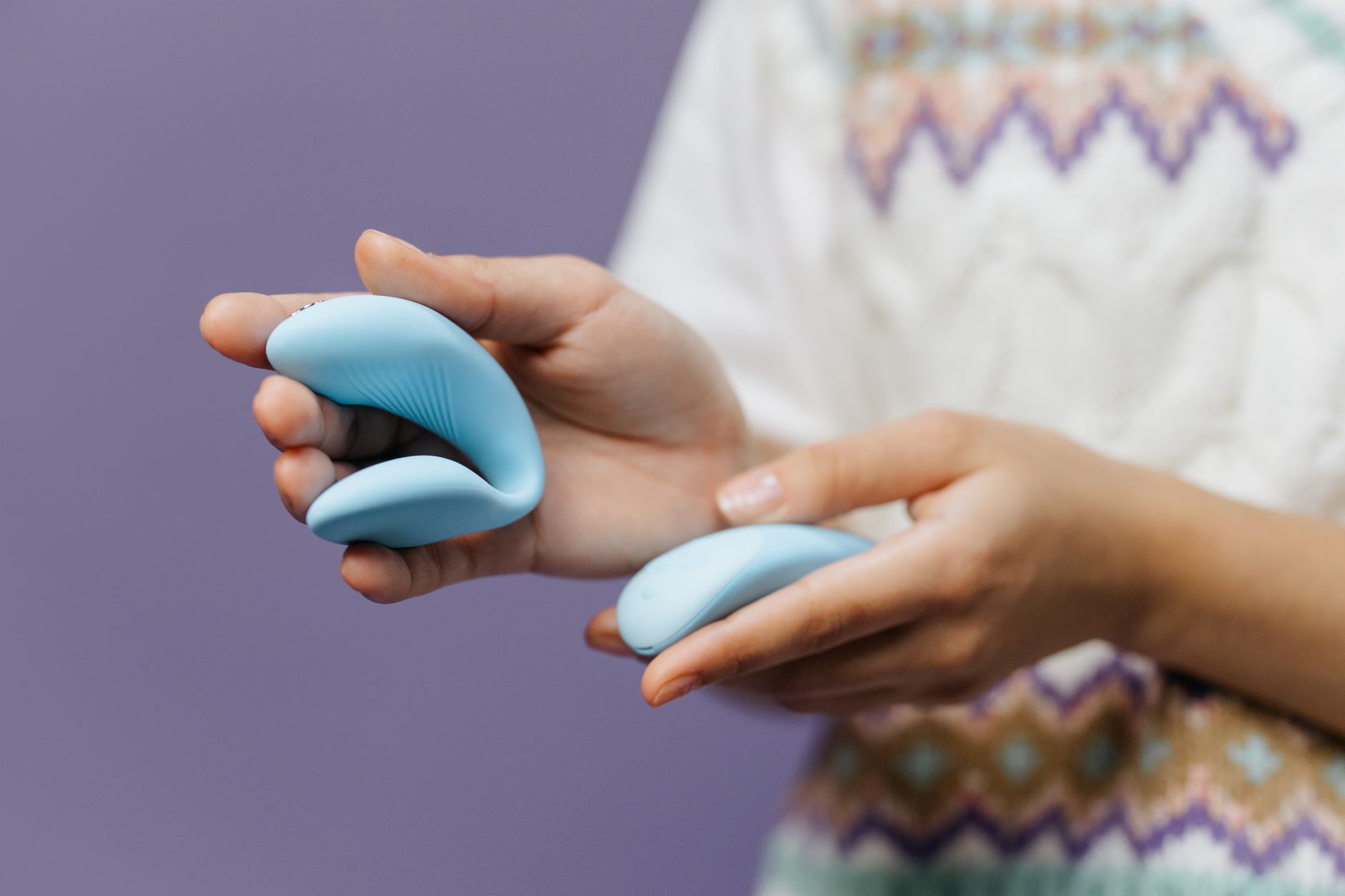
Photo by cottonbro studio on Pexels
Building your slow-pleasure practice
If you're used to rushing, genuinely slowing down takes practice. Here's a four-week progression you can actually stick to:
Week one: No goals. Use your lemon vibrator or hands for ten minutes daily with zero expectation of orgasm. Just notice sensation. That's it.
Week two: Pattern exploration. Spend five minutes on each of three different intensities. Which one feels best? Where does pleasure live at each level?
Week three: Extended warm-up. Spend ten minutes on low intensity before moving to medium. Notice how the extended buildup changes the eventual experience.
Week four: Presence check. Set a timer and try to notice whenever you drift into "how long has it been?" mode. When you catch yourself, return to breath and sensation.
After four weeks, rushing will feel less natural. Your body will have learned that slow actually works better.
When you've been trained to rush
There's a specific subset of people who've been rushing their own pleasure for so long that slowness feels almost uncomfortable. If you recognize yourself here, know that you're not broken. You've just been operating under survival mode for so long that ease feels suspicious.
This often happens to people who've had inconsistent access to privacy, or whose pleasure was conditional on someone else's needs, or who learned early that their own desires were inconvenient. The speediness became a way to take up less space.
Using a lemon vibrator in this case becomes an act of reclamation. You're saying: I get to take my time. I get to feel good without justifying it. My pleasure doesn't need permission and it doesn't need to be efficient.
You might benefit from exploring this with a therapist who specializes in sexuality. That level of nervous system retraining sometimes needs professional support. But you can start on your own, right now, by setting down the timer and picking up the lemon vibrator and saying: we're going slow today.
FAQ: Slow pleasure and pressure
How long should it actually take to have an orgasm with a clitoral vibrator?
There's no right answer. Some people climax in two minutes with a lemon vibrator. Others take twenty. Both are completely normal. The goal isn't to hit a specific timeframe. The goal is to get out of your head and into your body. That takes whatever time it takes on that particular day.
Is it selfish to want my partner to just... wait while I take my time?
No. Your pleasure matters as much as theirs. If a partner can't sit quietly and let you experience your own body on your own timeline, that's a relationship dynamic worth examining. You don't have to speed up to accommodate someone else's impatience. What you can do is have a conversation about what's driving their impatience, but from a place of clarity that you're not changing your pace.
What if I genuinely can't relax even with the pressure removed?
That's often a sign that something deeper is going on—anxiety, past trauma, or a nervous system that's been stuck in high alert for a long time. A lemon vibrator can help, but so can working with a therapist or sex coach. Sometimes the barrier isn't the tool. It's your body's learned patterns. Both are worth addressing.
Can I use a lemon clitoral vibrator while my partner watches if I'm nervous?
You can, but only if you want to. It's not a requirement. If watching makes you more self-conscious, that defeats the purpose. What matters is that you feel safe and present. If that means solo exploration first, do that. Your partner can learn about your pleasure in other ways.
Does slowing down mean I'll take longer to orgasm overall?
The opposite usually happens. When you slow down and stay present, your body actually responds more efficiently. You're not fighting against tension and anxiety. You're working with your nervous system instead of against it. Paradoxically, presence often leads to faster arrival when you finally let go.
What if my partner thinks I'm taking too long and leaves?
Then you have clarity about what that partnership is actually built on. Someone who can't prioritize your pleasure isn't a partner you should be having sex with. This is hard feedback, but it's important. You deserve someone who's interested in what actually feels good to you, not someone who's waiting for a performance.
The slow revolution starts with one session
You don't have to overhaul your entire sex life this week. You can pick one time this week to use your lemon vibrator—or your hands, or both—and deliberately slow down. Not forever. Just once. Notice what changes when you're not trying to finish.
Notice how your body responds. Notice how your mind feels. Notice whether the pleasure is actually deeper when you're not rushing it.
Then do it again next week. Build the practice. Your nervous system will thank you. Your pleasure will thank you. And somewhere down the line, you'll realize that the pressure to orgasm quickly was never about your body. It was about permission. And now you have it.
Ready to explore at your own pace? Get in touch if you want to talk through what slow pleasure actually looks like for you.