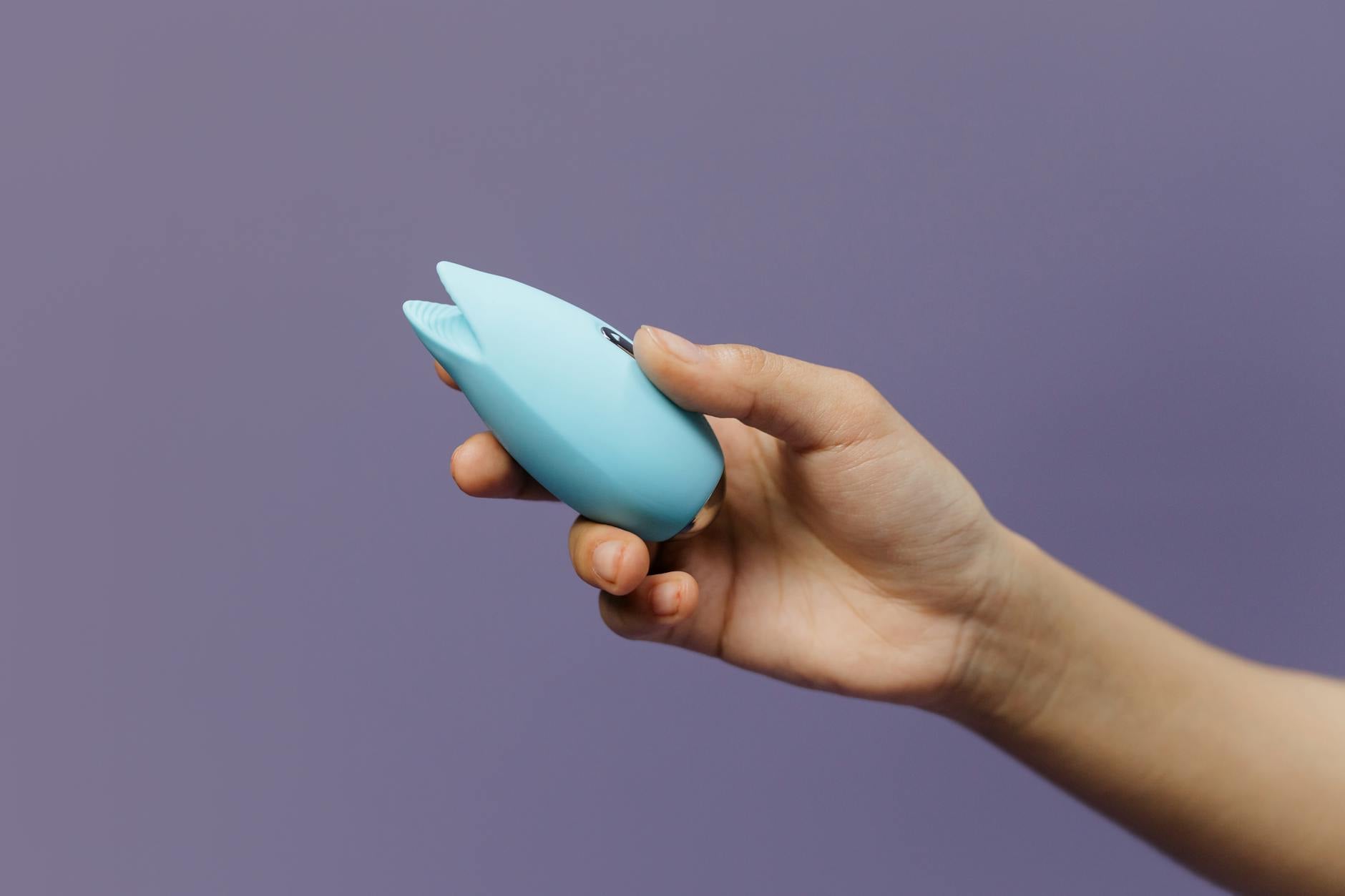
How to Use Lemon Vibrators When Sensitivity Changes With Hormonal Shifts
Let's be real: your body is not a machine with consistent settings. Hormones move through you like weather systems, and with each shift comes a change in how your skin feels touch, how quickly you warm up, and how intensely sensation registers. That doesn't mean pleasure goes away. It means the same vibrator that felt perfect last week might feel too much this week, or not quite enough.
This is where most conversations about pleasure fail. People assume that if something worked once, it should work the same way every time. When it doesn't, there's shame, frustration, and often a drift toward avoidance. What actually happens is totally normal. Your sensitivity is responding to real biochemical changes. The good news is that lemon sexual toys like the Lemon Clit Massager are built to work with your fluctuating sensitivity, not against it.
How hormonal shifts actually change sensation
Here's the part nobody explains clearly enough: estrogen, testosterone, and progesterone don't just affect your mood or energy. They actively reshape how sensitive your skin is and how your nervous system processes touch.
Estrogen peaks typically happen mid-cycle, and during these times, your clitoral tissue becomes more engorged with blood. This makes it more sensitive to stimulation. Your skin is also more receptive, and arousal tends to build faster. This is the window where even light vibration from a lemon clitoral vibrator can feel incredibly intense and pleasurable.
On the flip side, when progesterone rises in the luteal phase, or when estrogen dips before your period, everything changes. Your clitoral tissue has less blood flow. Your skin feels less reactive. What felt perfect at mid-cycle now feels muted or even irritating. You might need deeper pressure, longer warm-up time, or no vibration at all for a few days.
This isn't weakness. This is your nervous system doing exactly what it's designed to do.
Understanding the sensitivity sweet spots across your cycle
Most people don't track sensation changes against their cycle, so they end up frustrated without understanding why. Start noticing when you reach for your lemon vibrator and what settings feel right on that particular day. You'll probably spot a pattern.
Days 1-5 (Menstruation): Sensitivity is often lower. Pelvic pain or cramping might make vibration feel uncomfortable. If you do want to engage with a vibrator during this time, keep intensity low and focus on broader stimulation rather than direct clitoral touch. Some people find that gentle vibration actually helps with cramping. Pay attention to your own body.
Days 6-12 (Follicular Phase): Estrogen rises, and so does your sensitivity. This is often when lemon vibrators feel most responsive. The Lemon Clit Massager's suction technology works beautifully here because it builds sensation gradually without overwhelming tender tissue. You might find you enjoy higher intensity settings during this window.
Days 13-15 (Ovulation): Peak estrogen and a testosterone surge make this the window of highest sensitivity for most people. This is when you might want to explore varied patterns, longer sessions, or even partner play. Your body is primed for sensation.
Days 16-28 (Luteal Phase): Progesterone rises as estrogen falls. Sensitivity drops. You might need more time to warm up, lower intensity, or a completely different approach to pleasure. This isn't a bad time for lemon sexual toys. It's just a time to use them differently. Longer sessions, extended foreplay, and patience become your friends.
Adjusting your Lem vibrator settings to match your cycle
The Lemon Clit Massager doesn't have one speed. It has multiple intensity patterns, and that's intentional. During high-sensitivity windows, start at pattern one and let your body build arousal before moving to higher intensities. During lower-sensitivity phases, you might stay at pattern two or three for the entire session.
Here's a practical approach:
High-sensitivity days: Begin with the lowest setting and let it work. Don't rush to intensity. Your nervous system is already activated, and you might find deeper pleasure with restraint than you would by cranking intensity immediately. This is also when the suction pattern of lemon clitoral vibrators feels most pleasurable because it mirrors the natural rhythm of blood flow changes.
Moderate-sensitivity days: Most of your cycle lives here. Use the patterns intuitively. If a setting feels good, stay with it. If it feels flat, move up. There's no script. Your body gives you real-time feedback.
Low-sensitivity days: Extend your warm-up. Spend ten to fifteen minutes on foreplay before you bring the vibrator in at all. Use water-based lubricant generously, even if you don't think you need it. Start at the lowest setting and see if you need more. Sometimes lower sensitivity pairs beautifully with longer, slower sessions. You might discover new pathways to pleasure this way.
The role of lubrication in managing sensitivity changes
Sensitivity swings are often misread as a lubrication problem when they're actually a tissue responsiveness problem. That said, lubrication absolutely matters because it changes the mechanics of how vibration feels against your skin.
When you're in a high-sensitivity phase, you might produce more natural lubrication, and the Lemon Clit Massager's suction function works with that fluidity to create a smooth, responsive sensation. When you're in a low-sensitivity phase, your natural lubrication decreases, and adding a water-based lube actually helps the vibrator glide and reduces friction that might feel irritating.
This isn't about having a problem. It's about working with your body's actual design. Use lubrication in the phases when it helps, and don't force it when your body is generating its own. Pay attention to what feels good, not to what you think should feel good.
Partner communication during sensitivity shifts
If you're using lemon adult toys with a partner, sensitivity shifts can feel confusing to them too. A style that got great results last month suddenly feels wrong this month, and they might interpret that as lack of interest or a signal they're doing something wrong.
The simplest fix is honest conversation outside the bedroom. "My sensitivity changes with my cycle, so what feels amazing mid-cycle might feel too intense during my period or the week before. That's not about you. It's about my nervous system adjusting. Here's what helps me right now." This removes guesswork and shame from the equation.
You might also involve your partner in the experimentation. Let them help you notice which patterns feel good on different days. This turns a frustration into collaborative discovery.
When hormonal shifts point to something else
There's a difference between normal cycle-related sensitivity changes and a persistent loss of sensation that doesn't match your cycle. If you notice numbness, persistent pain, or a complete flat-lining of arousal that lasts weeks regardless of where you are in your cycle, that's worth discussing with a doctor.
Birth control changes, thyroid shifts, medication side effects, and stress can all mask themselves as hormone-related sensitivity problems. The lemon vibrator can help you stay connected during these transitions, but it's not a diagnosis tool. If something feels persistently wrong, get it checked.
Making sensitivity shifts work for you
Instead of treating sensitivity fluctuations as an inconvenience, start treating them as information. Your cycle is giving you real data about what your body needs. High-sensitivity windows are invitations to explore. Low-sensitivity windows are invitations to slow down and deepen. Neither is better. They're just different.
The beauty of lemon clitoral vibrators is their range. Whether your sensitivity is high or low on any given day, you have options that work with your body rather than against it. Pay attention to what patterns, intensities, and pacing feel right. That attention itself becomes a form of pleasure.
FAQ: Sensitivity Changes and Lemon Vibrators
Why does my sensitivity feel different at different times of my cycle?
Hormones control blood flow to your clitoral tissue, skin reactivity, and nervous system sensitivity. Estrogen peaks around ovulation, making tissue more engorged and sensitive. As progesterone rises in the luteal phase, that engorgement decreases, and sensitivity drops. This is completely normal physiology, not a sign of dysfunction.
Can I use my Lemon Clit Massager during my period?
Yes, if you want to. Some people find gentle vibration soothing during menstruation. Others prefer to skip it. There's no rule. Start with the lowest setting if you do use it, and stop if it feels uncomfortable. Pain during vibration is always a signal to pause.
Should I use different lemon vibrators for different phases of my cycle?
Not necessarily. The Lemon Clit Massager's multiple intensity settings handle the job across all cycle phases. What changes is how you use it, not the tool itself. Start lower during low-sensitivity phases and let intensity be guided by what feels good in that moment.
How much does lubrication matter when my sensitivity is low?
Quite a bit. Low-sensitivity phases often come with reduced natural lubrication, and adding water-based lube actually improves how the vibrator glides against your skin. This reduces friction and often makes sensation feel better, not worse. It's not a workaround for a problem. It's working with your body's actual state.
What if my sensitivity never changes with my cycle?
That's also fine. Not everyone experiences dramatic sensitivity shifts. You might have a more stable baseline, or your sensitivity might respond to other factors like stress or sleep instead. Track what you notice and use that information. There's no "correct" pattern.
Can hormonal birth control affect how my lemon vibrator feels?
Absolutely. Birth control hormones suppress your natural cycle, which can reduce the sensitivity peaks and valleys you'd normally experience. Some people report more consistent sensitivity on hormonal birth control. Others report lower overall sensitivity. If you notice a shift after starting birth control, give it three months and then reassess. Your body often adjusts.
Your sensitivity isn't a bug. It's a feature of how your body communicates with you across your cycle. Learning to read those signals and adjust accordingly turns what feels like an obstacle into a pathway for deeper self-knowledge and more intentional pleasure. That's exactly what lemon clitoral vibrators are designed to support.
If you're exploring how your body responds across your cycle, we're here to help. Get in touch with any questions about how to use the Lemon Clit Massager in ways that work for your unique sensitivity patterns.