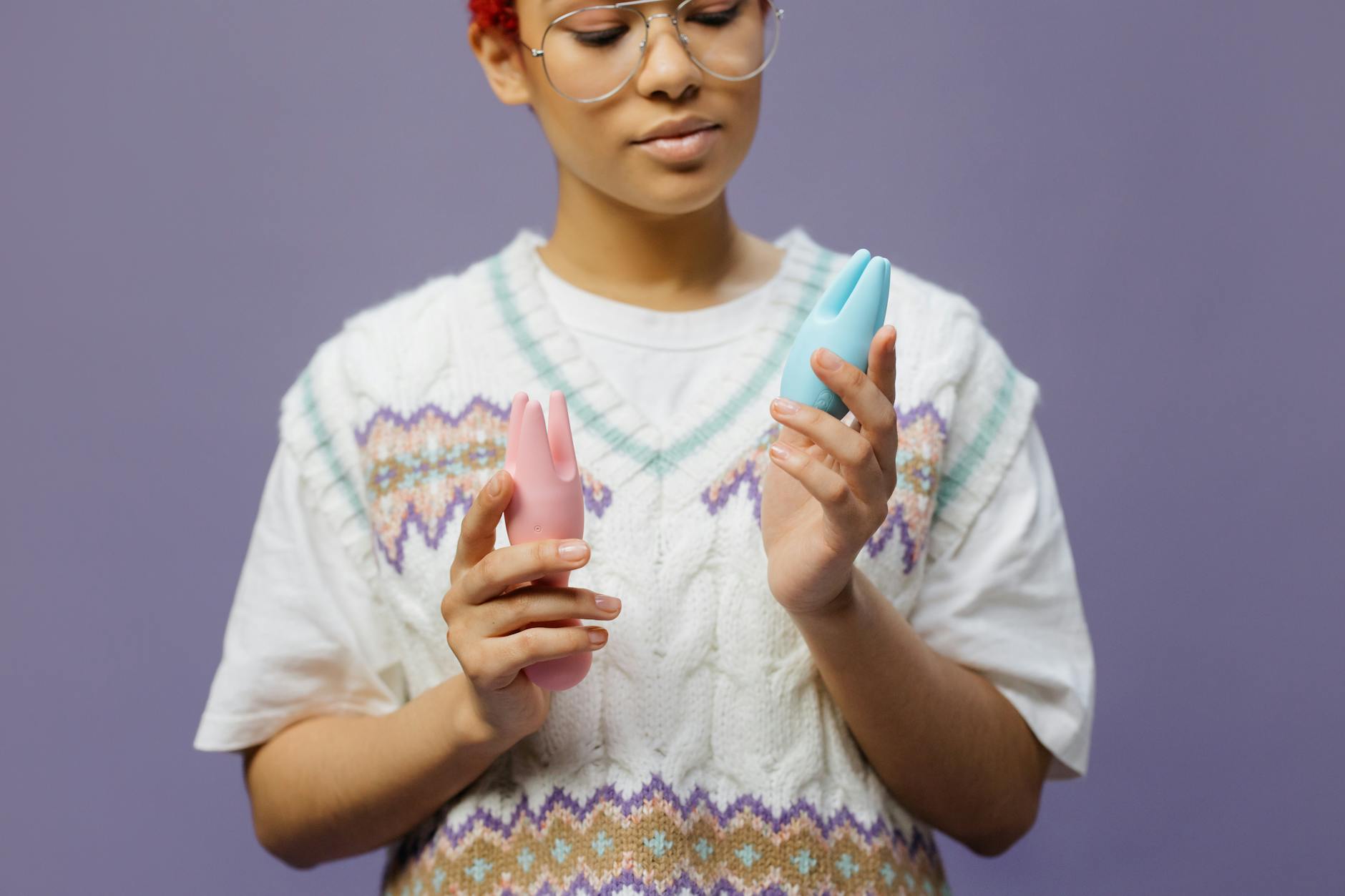
When intimacy stops feeling like a choice
Here's the thing nobody talks about: sex can feel mandatory. Not always, but enough. Maybe your partner wants it more than you do, or you feel obligated to keep them happy. Maybe you've internalized the idea that saying no means you're selfish. Maybe life is so full that the only "intimate" moment available is five minutes before bed, and by then you're too depleted to actually want anything.
When this happens regularly, pleasure doesn't just disappear. It gets complicated. Your body might shut down. Arousal becomes harder. Orgasms feel like a task instead of a reward.
Lemon vibrators, and specifically clitoral vibrators like the Lem, are genuinely helpful here. Not because they're magic, but because they shift the entire dynamic. They give you control. They slow things down. They make pleasure non-negotiable on your terms.
Why rushed intimacy changes your nervous system
When sex feels pressured, your sympathetic nervous system (the fight-or-flight branch) is partially activated. You're scanning for pressure, timing, whether you'll be able to finish, whether your partner is satisfied. Your body is not in parasympathetic mode, where pleasure actually happens.
This isn't character weakness. It's biology. The nervous system doesn't distinguish between "my partner wants sex" and "I'm in actual danger." Pressure is pressure. Your body responds by tensing, lubricating less, making arousal take longer, and sometimes making orgasm nearly impossible.
The research on this is clear: when people feel agency over the timing and pace of sex, arousal happens faster and feels more intense. One study found that women who felt they had control over sexual encounters reported 40% higher pleasure ratings than those in time-pressured situations.
How a lemon clitoral vibrator changes the power dynamic
When you introduce a lemon vibrator, especially in a partnered context, several things shift immediately.
First, it centers your pleasure. A vibrator isn't about your partner's performance or speed. It's about what your body needs, on your timeline. That alone is radical if you've spent years accommodating someone else's rhythm.
Second, it gives you a concrete way to say "slow down" without words. If you're using the Lem during partnered sex and your partner is moving too fast, you can just pause and focus on the vibrator. No negotiation needed. No guilt.
Third, it removes the pressure to climax through penetration alone. Many people with vulvas can't orgasm that way, or can't climax under time pressure. A lemon sucker like the Lem means orgasm isn't dependent on your partner's stamina or technique. It's accessible whenever you want it.
Starting with solo use first
If intimacy feels rushed, I always recommend starting alone. This isn't about avoiding your partner. It's about recalibrating your baseline for what pleasure actually feels like when there's zero pressure.
Set aside 30 minutes with no interruptions. Not five minutes. Not "whenever." A real block of time where you're not thinking about someone else's needs.
Start the lemon vibrator on the lowest setting. The point isn't to race to orgasm. It's to feel what happens when you're not in a hurry. Where does pleasure build? What kind of touch actually feels good? Does your body respond better to consistent patterns or variation? You might discover that you like a slow build, or that you need more focused stimulation than you thought.
Most people report that their first solo experience with a lemon clitoral vibrator feels surprisingly different from partnered sex. Slower. More nuanced. Easier. That's the baseline you want to carry into partnered situations.
How to use lemon vibrators in partnered situations where pace matters
Once you've spent time alone with the vibrator, the conversation with your partner becomes easier. Here's what I recommend:
First, talk about it outside the bedroom. "I want to use a vibrator during sex because it helps me feel more present and actually enjoy myself" is different from introducing it mid-encounter. Give your partner a chance to ask questions and understand that this isn't about their performance.
Second, be specific about how you want to use it. "I want to use the Lem while you're inside me" is clearer than "I want to use a vibrator sometimes." Specificity removes ambiguity and pressure.
Third, use the vibrator to set the pace you actually want. If your partner is going too fast, you can use the vibrator more deliberately, which naturally slows the encounter. If you want longer warm-up time, use the vibrator during foreplay instead of rushing into penetration.
The beauty of a lemon vibrator is that it gives both partners something concrete to focus on. Your partner isn't wondering if you're okay or if they're doing it right. You're both watching something that's clearly working.
When the pressure is internal, not external
Sometimes the rush isn't coming from a partner. It's coming from you. You feel like you should want sex. You feel like you should be able to climax quickly. You feel broken when neither of those things is true.
This is where self-compassion and a lemon clitoral vibrator meet. When you use a vibrator without the goal of getting to orgasm, something shifts. You're not trying to achieve. You're exploring. You're allowing your body to feel what it actually feels.
Many of my clients report that when they stopped performing and started playing with their lemon vibrator without a finish line, orgasms actually became easier. The pressure was what was making them impossible. The vibrator was just the permission slip to slow down.
Rebuilding trust in your own body
When intimacy has felt rushed or obligatory for a long time, your body becomes a thing that happens to you instead of a thing you inhabit. Pleasure becomes foreign.
Using a lemon sucker or any lemon vibrator regularly, on your own schedule, is how you rebuild that relationship. You're telling your nervous system: "You're safe. You get to decide. Your pleasure matters." That's not spiritual language. That's literally retraining your parasympathetic nervous system to stay calm and open during sexual situations.
After a few weeks of consistent solo use, you'll notice that you come to partnered situations from a different place. You're not depleted. You're not performing. You're actually interested in what's about to happen. And if it still feels rushed, you have the tool and the knowledge to slow it down.
FAQ: Pressure, pace, and pleasure
Can using a vibrator make me less sensitive to partnered touch?
No. That's a myth. What actually happens is the opposite. When you use a vibrator regularly, you become more attuned to your own responses. You learn what feels good. That makes partnered sex better, not worse, because you know what to communicate.
What if my partner feels threatened by a vibrator?
That's worth exploring separately from the vibrator itself. A partner's insecurity about a toy is usually about something deeper: fear of inadequacy, anxiety about control, or unfamiliarity with the idea that pleasure isn't a competition. A short conversation can help. "This isn't about you. This is about me feeling less pressured and enjoying myself more." If that conversation doesn't land, the issue isn't the vibrator.
How do I know if the problem is actually pressure, not something else?
Ask yourself: does sex feel better when you initiate and set the pace? Do you feel more aroused when there's no timeline? If yes, pressure is likely the culprit. If sex feels difficult regardless of circumstance, there might be physical factors worth discussing with a healthcare provider.
Should I use a vibrator every time I have partnered sex?
Absolutely not. The goal is to recalibrate what pleasure feels like, not to make vibrators essential. After a few weeks or months of solo exploration, many people find they want to use them sometimes and not others. That's the whole point. You get to choose.
Can a lemon vibrator help if my partner and I have completely different libidos?
Partially. A vibrator helps you access pleasure on your own terms, which relieves some of the pressure if your partner wants sex more often. But libido mismatch is also about communication, and sometimes about deeper relationship dynamics. The Lemon Clit Massager can help you feel less resentful about the mismatch, but it can't solve the core issue of wanting different frequencies. That might need a separate conversation.
What if I feel guilty using a vibrator because it feels self-focused?
Pause on that one. Your pleasure is not selfish. It's necessary. When you feel good and present in your body, you're actually more available to your partner, not less. You're not in your head worrying about performance. You're engaged. That benefits both of you.
The bigger picture: pressure is a connection killer
Intimacy that feels rushed or obligatory isn't intimacy. It's a transaction. Real connection happens when both people feel safe, unchoreographed, and genuinely interested in what's happening.
A lemon clitoral vibrator won't fix a relationship problem. But it can give you back your body, your timeline, and your agency. It can show you what pleasure actually feels like when there's no external pressure. And from that place, you can decide what you actually want. That might be solo exploration. That might be partnered sex with a completely different dynamic. That might be a conversation with your partner about pacing and pressure that you wouldn't have had otherwise.
The Lem and other lemon vibrators exist for this reason. To remind you that your pleasure is not negotiable. Start there.
Resources and next steps
If you want to explore this further, we have detailed guides on how lemon vibrators work with other scenarios: how to use lemon vibrators when sensation feels numb after antidepressants covers medication-related pleasure shifts, and how to use lemon vibrators to rebuild intimacy after infidelity addresses deeper relational work.
For questions about specific products or personalized recommendations, reach out to our team. We're here to help.