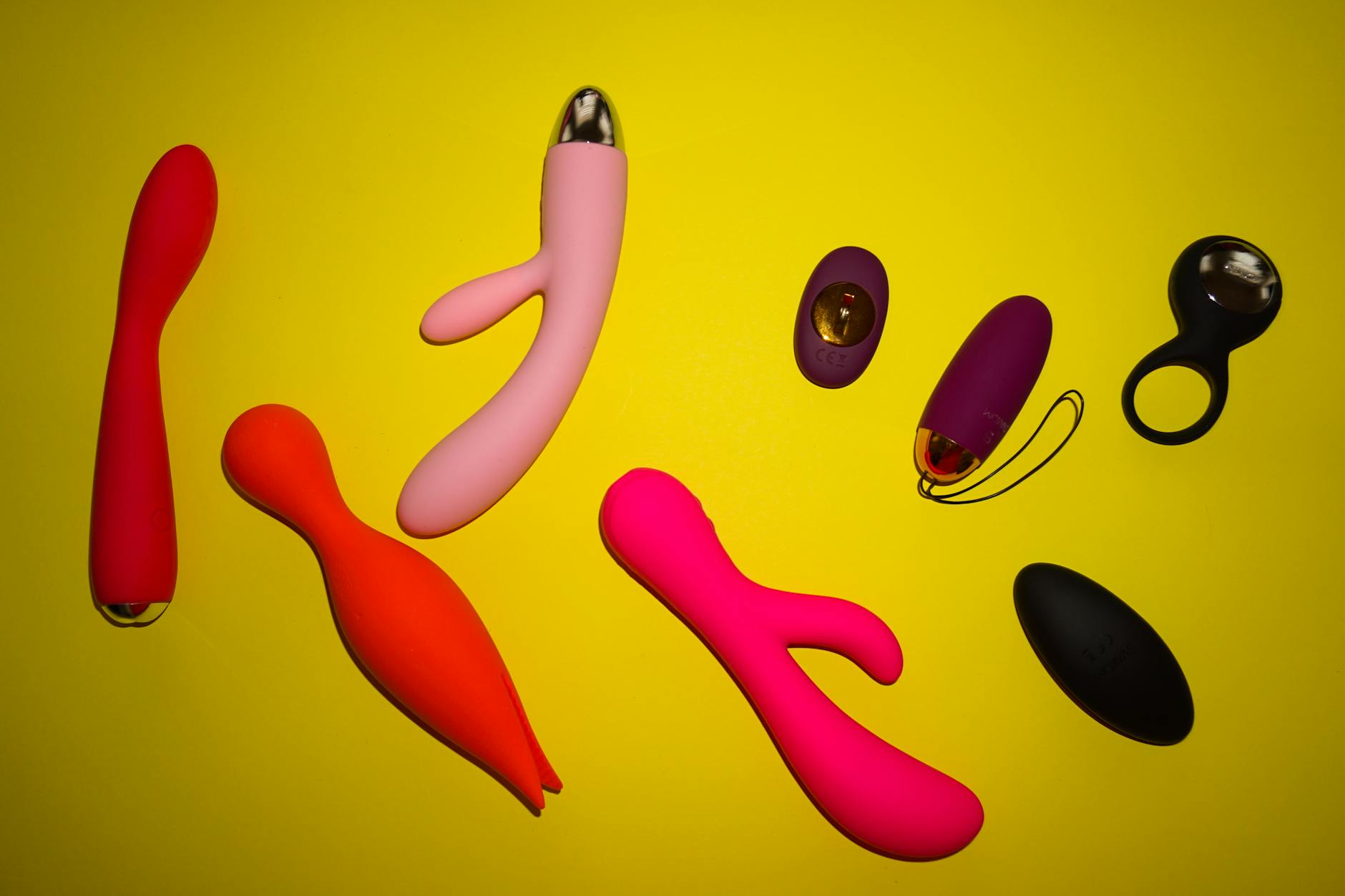
When sensitivity shifts without explanation
Your clitoris wakes up different every morning. Some days it's hypersensitive to the gentlest touch. Other days you could run a lemon vibrator at full intensity and feel almost nothing. If this sounds familiar, you're not alone—and you're also not broken.
Clitoral sensitivity fluctuates for reasons that have nothing to do with how much you want pleasure or whether you're doing something "wrong." Hormones, stress, dehydration, caffeine intake, medication, sleep, arousal patterns, and even where you are in your cycle all shift your nervous system's responsiveness. The problem isn't the unpredictability itself. The problem is that most guidance assumes your sensitivity stays static.
Let me give you a framework that works when it doesn't.
What actually causes clitoral sensitivity to shift
Your clitoris has roughly 8,000 nerve endings packed into a space the size of a pea. That concentration means it's exquisitely responsive to your nervous system's overall state. When you're sympathetic-dominant (stressed, caffeinated, anxious), blood vessels constrict and sensation dampens. When you're parasympathetic-dominant (calm, well-rested, genuinely turned on), blood flow increases and sensation amplifies.
Hormonal shifts matter too. Estrogen affects tissue elasticity and blood flow. Progesterone influences how your nervous system processes sensation. Androgens (yes, people with vulvas have them) directly affect clitoral engorgement and sensitivity. A week before your period, your clitoris might feel like a live wire. A week after, it might need significantly more stimulation to wake up.
Then there's the nervous system piece. If you're in a season of high stress, grief, or relationship friction, your body literally prioritizes survival over pleasure. Your clitoris isn't being stubborn. Your brain is protecting you.
How to assess your sensitivity on any given day
Before you reach for a lemon vibrator, spend two minutes checking in. This is the single most useful practice I recommend, because it prevents you from making the situation worse.
Start dry. Use one finger and very lightly touch the shaft of your clitoris—not the glans (the most sensitive tip), just the shaft. Notice the baseline. Does it feel numb, normal, or activated?
Add a tiny bit of saliva or lube and repeat. Does sensation increase? By how much?
Now touch the clitoral glans itself with the same light pressure. This is your sensitivity meter. If even that feels overwhelming, you're hypersensitive. If it feels like almost nothing, you're in low-sensitivity territory.
This 90-second audit prevents you from reaching for pattern 5 on the Lem when your clitoris needs pattern 1. And it prevents you from never using your lemon clitoral vibrator because you had one bad experience when you were stressed and couldn't feel anything.
When sensitivity is high: the counterintuitive approach
Hypersensitivity feels like a win—finally, sensation!—until it's too much and you can't touch yourself without feeling sharp or almost painful stimulus. This is where most people make a tactical error: they stop using their vibrator entirely.
Don't. Instead, switch your approach.
Start with the vibrator fully off, placed directly on the clitoral glans. Let it sit there, unmoving, for 10-30 seconds. Your nervous system will adapt to the presence of the object. Then turn it on at the lowest setting (pattern 1 on a lemon sucker or lemon vibrator) and keep it stationary. Don't move it around. Movement + vibration + hypersensitivity = overstimulation.
Your goal here isn't to build toward anything. It's to let the vibration do the work while you stay still. Many people find they can reach orgasm this way, without ever increasing the intensity, simply because the static pressure and low-frequency vibration create a sustainable sensation.
If even pattern 1 feels sharp, try covering your clitoris with one layer of soft fabric—a silk or cotton underwear edge, or even a folded piece of clean cloth. This diffuses the vibration slightly while maintaining stimulation. It sounds weird. It works.
When sensitivity is low: rebuilding responsiveness
Low sensitivity is frustrating because it feels like your vibrator isn't working, when really your nervous system is offline. Standard advice is "just use more power," which is exactly backward.
When you're in low-sensitivity territory, your nervous system needs activation before your clitoris can feel much of anything. This means arousal-first, vibrator-second.
Spend 10-15 minutes doing something that genuinely turns you on before you touch your clitoris with any toy. Read something sexy. Watch something that works for you. Touch other parts of your body—inner thighs, nipples, neck. Your goal is to get blood flowing and your parasympathetic nervous system engaged.
Only then bring in the lemon vibrator. Start at pattern 2 or 3 (not pattern 1, because you won't feel it). Use a water-based lube—this matters more than you'd think, because moisture against your clitoris creates a more conductive surface for the vibration. Move the vibrator slowly in small circles, rather than holding it static. Movement helps "wake up" sensation when the baseline is low.
If you still can't feel much, check the obvious culprits: Are you dehydrated? Had more than one coffee today? Stressed about something you haven't named? On a medication that affects sensation (some SSRIs and blood pressure meds do this)? Not sleeping enough?
These aren't character flaws. They're just information.
The rhythm approach: meeting your clitoris where it is
Instead of expecting your sensitivity to be consistent, build a week-long practice that honors where you actually are.
Hypersensitive days: Low intensity, static positioning, potentially with a fabric barrier. Think of this as a "receiving" day—you're letting sensation come to you rather than chasing it. One orgasm (or none) is the goal, not multiple.
Moderate sensitivity days: These are your "normal" days. This is when pattern 2-3 on the Lem works beautifully. This is when you have room to explore different speeds or angles without feeling like you're chasing something that won't come or running from something too intense.
Low sensitivity days: Arousal-first, then vibrator at pattern 3-4. Movement rather than stillness. More lube. Longer sessions. These days you might need 20-30 minutes to get to orgasm, and that's completely fine.
The framework here is adaptation, not force. You're not trying to make your clitoris feel the same way every day. You're working with its actual state.
When unpredictability points to something bigger
Some fluctuation is normal. Dramatic shifts—where you go from highly responsive to barely responsive over days or weeks, with no obvious trigger—can sometimes point to something worth investigating.
Depression flattens sensation. Anxiety can create hypersensitivity or numbness depending on your nervous system. Pelvic floor tension (often from stress or past trauma) can mask sensation or make everything feel overwhelming. Unmanaged blood sugar swings affect your nervous system's baseline state. Hormonal changes from new medication, birth control adjustments, or cycle shifts can be significant.
None of these are failures. But they're worth noticing. If your sensitivity shifts have coincided with a medication change, a relationship shift, a life stress, or a change in your cycle, that's useful data. You might benefit from talking to a healthcare provider, a therapist, or both.
If you suspect pelvic floor tension is the culprit, consider working with a pelvic floor physical therapist. They can assess whether your muscles are holding too much tension, which genuinely does affect sensation and your ability to feel pleasure.
The mindset shift that changes everything
Here's what I've noticed in my practice: people with unpredictable clitoral sensitivity often spend their time frustrated that pleasure "isn't reliable." But reliability isn't actually the issue. Your body is reliable—it's reliably responding to your actual state on any given day. The friction comes from expecting it to be consistent when it's not supposed to be.
Your clitoris isn't a machine with a fixed setting. It's a sensitive feedback system that's always telling you something true about your nervous system, your stress level, your hormones, your health. The unpredictability isn't a bug. It's data.
Once you stop fighting that variability and instead learn to work with it, lemon vibrators become incredibly useful tools. You're not trying to override what your body's telling you. You're having a conversation with it.
FAQ: Unpredictable clitoral sensitivity and lemon vibrators
Why does my clitoris feel numb some days even though I'm turned on?
Turned-on mentally and turned-on neurologically aren't always the same thing. You can be interested in sex while your nervous system is still in a mild stress response—maybe you're thinking about work, worried about something, or just carrying body tension. The clitoris is extremely sensitive to this gap. Your mind says yes, but your parasympathetic nervous system says "not yet." Before using a vibrator, try 5-10 minutes of deep breathing or a few minutes of touching other erogenous zones to fully drop your nervous system into pleasure mode.
Is it normal for my clitoris to feel painful with vibration some days?
Yes, and it usually means hypersensitivity. This often happens when you're stressed, haven't eaten, or are dehydrated—your nervous system is in a heightened state and your clitoris is responding by being hyperresponsive. Try using your lemon vibrator on the lowest setting with a fabric barrier, or don't use it at all that day. Pain isn't information that you should push through. It's information that your nervous system needs a break.
Can birth control affect clitoral sensitivity?
Absolutely. Birth control changes your hormone levels, which directly affects blood flow to your clitoris, tissue elasticity, and how your nervous system processes sensation. Some people report decreased sensation on hormonal birth control, others report increased sensation. If you've recently started or switched birth control and noticed sensitivity changes, this is worth tracking. Give it 2-3 cycles before deciding if the change is permanent. And talk to your provider if it's significantly affecting your pleasure.
What if my clitoral sensitivity changes throughout the day?
It can. Morning sensitivity is often different from evening sensitivity because cortisol levels are higher in the morning and you might not be fully hydrated yet. Caffeine intake, stress, meal timing, and how much sleep you got all affect your baseline sensitivity within a single day. This is why checking in with a quick sensitivity assessment before using your lemon vibrator matters. You're not being inconsistent. Your body is responding to your actual state.
Should I be concerned if I'm always hypersensitive or always low-sensitivity?
Consistent hypersensitivity might point to pelvic floor tension, nerve hypersensitivity, or a persistent stress response. Consistent low sensitivity might relate to medication effects, hormonal imbalance, depression or anxiety, or pelvic floor dysfunction (sometimes the floor is too tight, sometimes too loose and not providing enough support). Either extreme is worth mentioning to a healthcare provider or a pelvic floor physical therapist, especially if it's new or has gotten worse. You deserve to understand what's happening with your own body.
Can I train my clitoris to feel more consistent?
Not really, and that's actually good news. You can't train sensitivity to be stable, but you can train yourself to work skillfully with whatever sensitivity you have on any given day. The more you practice the assessment routine and adjust your approach accordingly, the less the variability bothers you. You're not fixing your clitoris. You're learning to speak its language.
The thing nobody tells you
Clitoral sensitivity unpredictability isn't a sign that something's wrong with you or your lemon vibrator. It's a sign that you're in a living body that responds to your actual state. Some days your clitoris is a live wire. Some days it needs patient, grounded presence to wake up.
Both are normal. Both are workable. And once you accept that, your vibrator becomes a much more useful tool because you're not fighting against what's actually true.
Ready to explore how your sensitivity works? Start with that two-minute check-in before your next session. Pay attention to what pattern works, what position, whether you need stillness or movement. Your clitoris will tell you exactly what it needs if you bother to listen.
If you're navigating this alongside a partner, communication about what you're experiencing matters more than ever. You're not rejecting them or the experience. You're being honest about your actual state. That honesty builds deeper connection than pretending everything feels the same every time.
Your pleasure is worth this attention. And your clitoris will thank you for meeting it where it actually is.