
When wetness becomes the variable nobody warned you about
Lubrication is not a constant. It shifts. Some days you're ready to go in seconds. Other days, nothing. Same body. Same partner. Same vibrator. The difference is everything, and it makes or breaks the experience with a lemon clitoral vibrator.
Here's the thing most sex advice skips over: natural lubrication depends on roughly fifteen different biological and psychological variables. Stress, sleep, hydration, cycle phase, medications, arousal time, what you ate yesterday, whether you're thinking about your email inbox. All of it matters. None of it is your fault. And understanding it transforms how you use any clitoral vibrator, including the lemon.
Why lubrication changes day to day
Estrogen directly affects vaginal moisture. Your estrogen levels shift throughout your menstrual cycle. They also shift if you're on hormonal birth control, dealing with perimenopause, breastfeeding, or taking medications that dry you out. A week before your period, lubrication often dips. During the follicular phase (after your period), it usually climbs. But "usually" is doing heavy lifting here. Individual variation is wild.
Then there's psychological arousal. Your brain controls lubrication just as much as your hormones do. Stress, anxiety, negative self-talk, distraction, not enough warm-up time—these suppress natural lubrication. Sometimes within minutes. You can be genuinely aroused mentally and still feel dry physically. This is normal. It is not a sign that something is broken.
Hydration matters too. Dehydration reduces lubrication across the board. If you're not drinking enough water, especially on hot days or after exercise, your body has less fluid to allocate. Same thing happens if you're on antihistamines, antidepressants, or birth control pills that lean toward the drying side.
The lemon vibrator adjustment: work with inconsistency instead of against it
Unlike some clitoral vibrators, the lemon uses suction and rhythmic pulsing rather than direct friction. This is actually a massive advantage when lubrication is unpredictable. Suction doesn't require the same glide as a vibration-only toy does. But you still need to adjust your approach based on what your body is offering that day.
On high-lubrication days: Start at intensity level 2 or 3. Your body has natural glide, so you can go a bit firmer without discomfort. You might discover that a pattern you found too intense last week works perfectly today. This is not crazy. It's your body responding to more available moisture. Lean into it.
On medium-lubrication days: Start at level 1 or 2. This is your baseline. Most people find this comfortable for a 20 to 30 minute session. It gives you feedback without overwhelming your tissues.
On low-lubrication days: Add lube first, then start at level 1. This is not failure. This is strategy. I'll get into lube selection next.
Choosing the right lubricant for your lemon vibrator
Your lube choice matters more than most people realize. The lemon is a silicone toy, which means you cannot use silicone-based lube. Full stop. Silicone lube will degrade the silicone body over time. Water-based lubes are your only option, and honestly, they're your best option anyway.
There are three categories of water-based lubes worth knowing about.
Glycerin-based lubes are the classic choice. They're cheap, widely available, and effective. Downside: they can feel sticky after a while, and if you're prone to yeast infections, glycerin can feed the bacteria. But plenty of people use them without issue.
Hyaluronic acid lubes are newer and honestly brilliant. They mimic the texture of natural lubrication much more closely. They hydrate as they work. They don't get sticky. If you have sensitive skin or recurrent yeast infections, this is worth trying. Brands like Sliquid Organics H2O are solid.
Oil-based lubes (coconut oil, etc.) are not compatible with silicone toys, so skip these entirely for the lemon.
My recommendation: keep a small bottle of hyaluronic acid lube at your bedside. Apply it directly to the lemon before you start, or apply it to yourself and let it warm for a moment. You're not adding lube because you're broken. You're adding lube because you're being strategic about comfort and sensation.
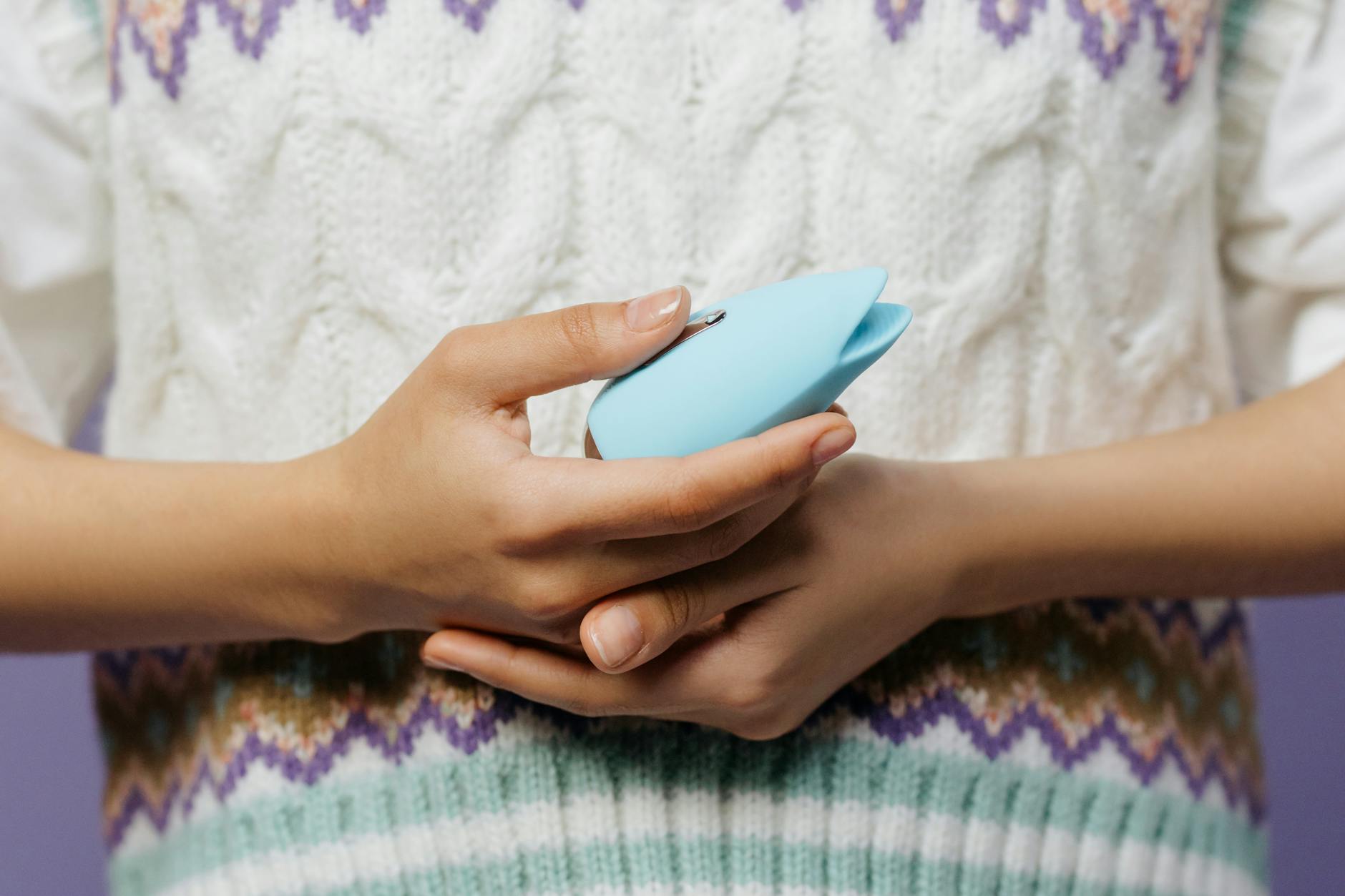
Photo by cottonbro studio on Pexels
The warm-up variable nobody tracks
If your natural lubrication is inconsistent, the single most impactful change you can make is lengthening your warm-up. Not for him. For your body.
Arousals take time to build. Psychological arousal (being mentally turned on) and physical arousal (lubrication, engorgement, sensitivity) don't always sync up, especially under stress. The cultural narrative pushes people to go from zero to vibrator in ninety seconds. That works for maybe 15% of people on good days.
If you're someone whose natural lubrication varies, budget 15 to 25 minutes of warm-up before you introduce the lemon. This means time thinking about what you want. Touching yourself without the toy. Engaging with erotica if that works for you. Movement. Music. Whatever gets your brain and body talking to each other.
With this extra time, your natural lubrication almost always rises. Even if it doesn't, you'll be more relaxed, more connected to sensation, and the lemon will feel infinitely better.
Reading your body in the moment
Once you start using the lemon, pay attention to how it feels in the first minute. If it feels too dry or slightly uncomfortable, stop immediately. Add a bit more lube to either yourself or the toy, then restart. You're not wasting time. You're preventing discomfort that would derail the whole session.
If it feels good, you can stay at that intensity level for 10 to 15 minutes before deciding whether to bump up. Many people find that the longer they're in it, the more natural lubrication they produce. You might start at level 2 and by minute 12 feel ready for level 4. That's not unusual.
If it feels uncomfortable at any point, you have three options: add lube, lower the intensity, or take a break. Any of these is a smart move, not a failure.
The inconsistency that actually signals a problem
Most variation in natural lubrication is normal. But sharp changes that show up suddenly and don't improve with time or lube warrant a conversation with a healthcare provider.
If lubrication drops off dramatically after a medication change, mention it to your prescribing doctor. They can sometimes switch you to something different or suggest mitigation strategies.
If you experience pain along with dryness, especially if it's persistent, that's worth checking out. Genitourinary syndrome (a real condition involving tissue thinning and reduced lubrication) is treatable. So is atrophy related to low estrogen. Neither one is permanent.
If lubrication is inconsistent but never painful, and lube solves it, you're probably just dealing with normal variation. Hormones, stress, and hydration are doing their thing.
What actually helps: the realistic checklist
If you're frustrated by inconsistent natural lubrication, try this, in order:
First, drink more water. Not obsessively, but genuinely hydrate. Two liters a day is a decent baseline for most people.
Second, extend your warm-up. Give your body time. This alone fixes the problem for a lot of people.
Third, add lube strategically. Keep a small bottle nearby. Water-based, hyaluronic acid if possible. Use it. No shame in it.
Fourth, lower your intensity expectations on low-lubrication days. The lemon feels amazing at level 1. You don't always need level 4.
Fifth, notice patterns. Track for three cycles if you menstruate. You might find that lubrication dips at predictable times. Once you know the pattern, you can plan accordingly.
Fifth, if nothing changes after a month of adjustments, check in with a healthcare provider. They can rule out medication side effects or other fixable issues.
People also ask
Can I use coconut oil with my lemon clitoral vibrator?
No. Coconut oil is silicone-based and will degrade your lemon vibrator over time. Stick to water-based lubes only. Hyaluronic acid lubes are your best bet for texture and comfort.
Why am I suddenly much less lubricated than I used to be?
It could be a medication change, a shift in hormones, dehydration, stress, or a combination. If the shift happened after starting a new medication, mention it to your doctor. If it's just inconsistency that responds well to lube and warm-up time, it's probably normal variation. If it's accompanied by pain or other symptoms, see a healthcare provider.
Does using lube mean my body isn't working right?
Not at all. Lubrication varies naturally. Using lube is an adaptation, not an admission of failure. Plenty of people with perfectly healthy bodies use lube regularly. It's a tool, and a smart one.
How much lube should I use with the lemon vibrator?
Start with a small amount, about the size of a pea, applied to the lemon or to your body. You can always add more if needed. Less is easier to manage than too much, which can make the toy slide around unpredictably.
Does natural lubrication come back if I've been dry for a long time?
Yes, usually. If dryness is tied to stress, time off from sexual activity, or a recent medication change, improved lubrication often returns once the underlying factor shifts. If it's tied to hormonal changes or age, lubrication might not return to what it was before, but lube makes that irrelevant. Your pleasure doesn't depend on having a certain amount of natural lubrication.
Can I use my lemon vibrator if I have virtually no natural lubrication?
Yes, with lube. Water-based lube changes everything. Apply it, give your warm-up time, start at a low intensity, and pay attention to comfort. You'll likely find that extended arousal time produces some natural lubrication, which builds as you go. The lemon works beautifully even if you're starting from zero.
The real bottom line
Inconsistency is one of the most common things people never talk about. You're not weird. Your body isn't broken. Hormones, stress, medications, hydration, and a dozen other factors influence lubrication. Once you stop treating it as a fixed thing and start treating it as a variable you can work with, the lemon vibrator becomes infinitely more useful.
Water-based lube, longer warm-up time, and starting at a lower intensity on dry days. That's it. That's the whole system. Your pleasure is worth the tiny bit of strategic thinking.